
Bosnia & Herzegovina
UEFA Playoff Path A Winner • 2nd Appearance • Last Appearance: 2014
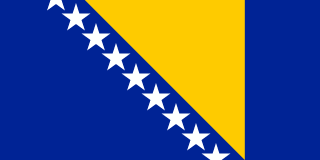
Bosnia & Herzegovina
1 – 1
Won 4-1 on Penalties

Italy

Football Association of Bosnia and Herzegovina
UEFA Playoff Qualified • Group B
Qualification Journey
Bosnia & Herzegovina secured their place at the 2026 FIFA World Cup in the most dramatic fashion imaginable, defeating four-time champions Italy 4-1 on penalties after a pulsating 1-1 draw at the Stadion Bilino Polje in Zenica on March 31, 2026. The result sent shockwaves through world football and confirmed Bosnia’s second-ever World Cup appearance, 12 years after their debut at Brazil 2014.
The qualification campaign was marked by several key achievements:
- Stunning penalty shootout victory over four-time champions Italy
- Semifinal victory over Wales (4-2 on penalties) in Cardiff
- Edin Dzeko’s inspirational leadership at 40 years of age
- Sergej Barbarez’s tactical transformation as head coach
- Resilient defensive performances throughout the playoff rounds
Match Analysis: Bosnia & Herzegovina 1-1 Italy (4-1 on Penalties)
The playoff final against Italy at the Bilino Polje was a night that will live forever in Bosnian football history. Italy struck first through Moise Kean in the 15th minute, and it appeared the Azzurri’s experience would carry them through. But Bosnia, roared on by an electric home crowd, never wavered. Italy were reduced to 10 men during the first half, and Bosnia took advantage as the match wore on.
The breakthrough came in the 79th minute when Haris Tabakovic pounced on a rebound after Edin Dzeko’s powerful header was saved off the line, sending the Zenica crowd into delirium. The match headed to extra time and then penalties, where Bosnia were clinical, converting four of their spot kicks while Italy managed just one. Esmir Bajraktarevic converted the winning penalty, sparking scenes of unbridled joy across Bosnia & Herzegovina.
UEFA Playoff Campaign
Bosnia’s route to the World Cup began with a tense semifinal against Wales in Cardiff on March 26, where they drew 1-1 before winning 4-2 on penalties. The composure shown in that shootout proved to be a rehearsal for the even more dramatic final against Italy. Under Sergej Barbarez, appointed in April 2024, the team developed a resilient identity built on defensive solidity and quick counter-attacking football.
The playoff path was arguably the most difficult of the four UEFA routes, featuring some of the strongest unseeded nations. Bosnia’s ability to navigate past both Wales and Italy demonstrated not only their quality but also their remarkable mental fortitude. The penalty shootout expertise displayed across both matches was no coincidence — it was the result of meticulous preparation by Barbarez’s coaching staff.
Squad Evolution and Key Players
The current Bosnian squad blends the experience of the golden generation with exciting emerging talents. At 40 years old, Edin Dzeko remains the team’s iconic figure and captain, his header against Italy that led to the equalizing goal serving as a symbol of his enduring quality and determination to reach one more World Cup. Dzeko’s leadership both on and off the pitch has been invaluable in mentoring the next generation.
Haris Tabakovic has emerged as a crucial goalscoring presence, with his equalizer against Italy proving to be one of the most important goals in Bosnian football history. Esmir Bajraktarevic’s nerve in converting the decisive penalty demonstrated the fearlessness of Bosnia’s younger players. In midfield, Benjamin Tahirovic and Armin Gigovic provide energy and creativity, while Ermedin Demirovic offers an additional attacking threat that gives Barbarez tactical flexibility.
Tactical Approach and Playing Style
Under Sergej Barbarez, Bosnia & Herzegovina have developed a pragmatic yet effective playing style that prioritizes defensive organization and clinical counter-attacking. The team’s ability to absorb pressure and strike on the break was perfectly demonstrated against both Wales and Italy. Barbarez has instilled a remarkable team spirit and collective belief that has transformed Bosnia from talented underachievers into genuine competitors.
The team typically operates with a compact defensive shape that transitions rapidly into attack, utilizing the pace and directness of their wide players alongside the hold-up play of Dzeko or Tabakovic. This approach proved particularly effective against Italy, where Bosnia’s willingness to cede possession while remaining dangerous on the break frustrated the Azzurri throughout the match.
Looking Ahead to 2026 World Cup
Drawn into Group B alongside Canada, Qatar, and Switzerland, Bosnia & Herzegovina face a challenging but navigable path in their second-ever World Cup. The experience of their 2014 debut, where they narrowly missed advancing from a group containing Argentina, Nigeria, and Iran, provides valuable lessons for the squad. The current team’s blend of veteran leadership and youthful energy offers genuine hope for a deep run in the expanded 48-team tournament.
The story of a small nation of 3.2 million defeating four-time champions Italy to reach the World Cup has captured the imagination of the football world. With the tournament being held across North America, Bosnia’s passionate diaspora community in the United States and Canada will ensure incredible support. The fairy-tale nature of their qualification — led by a 40-year-old captain and a rookie head coach — adds a compelling narrative heading into the summer of 2026.
This qualification marks Bosnia & Herzegovina’s second appearance at the FIFA World Cup, following their debut in 2014 in Brazil. Their stunning penalty shootout victory over four-time champions Italy is one of the greatest upsets in World Cup qualifying history, with the Dragons becoming only the second nation to eliminate Italy in a World Cup playoff after Sweden in 2017.